
MENU
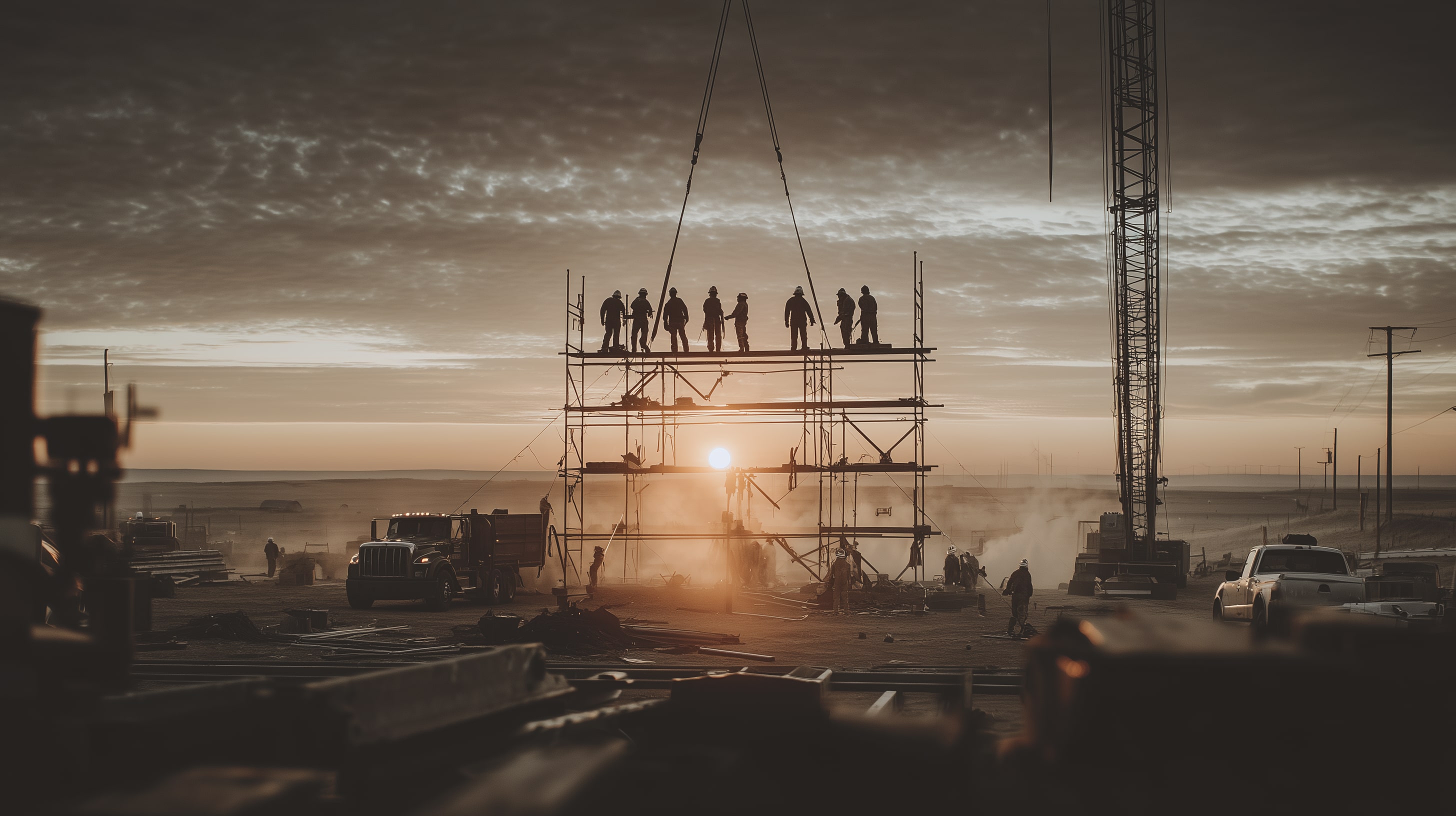
The American Midwest stands at the heart of the most significant manufacturing transformation in generations. Over the last century, American manufacturing has experienced four major transformative phases: Mass Production, Automation, Lean Manufacturing, and Globalization. A fifth phase has emerged, and it's reshaping the industrial landscape from Detroit to Milwaukee, from Cleveland to Indianapolis. We call it "Intelligent Manufacturing."
The Intelligent Manufacturing phase will revitalize the American Midwest and dramatically improve productivity across traditional industrial sectors. It fundamentally transforms how products are designed, produced, and delivered through the integration of artificial intelligence, robotics, and digital technologies with physical manufacturing processes.These manufacturing processes have been complicated over the last two decades by global supply chain disruptions, skilled labor shortages, and the exponential growth of manufacturing data. In the past five years alone, the amount of data generated on factory floors has grown exponentially, from sensor networks, quality control systems, and supply chain tracking that require sophisticated AI-powered platforms to help manufacturers optimize operations and respond to market demands in real-time.The global advanced manufacturing market was valued at $151.54 billion in 2023 and is projected to expand at a CAGR of 24.4%, reaching $535.5 billion by 2030, representing one of the fastest-growing technology sectors globally.¹ The AI in manufacturing market is projected to reach $8.57 billion by 2025, up from $5.94 billion in 2024, reflecting a CAGR of 44.2%.² More dramatically, manufacturers report productivity gains of up to 20% in both production output and workforce efficiency from smart manufacturing investments.²Companies can now monitor, predict, and optimize every aspect of production using technologies that seemed like science fiction just a decade ago. Examples of manufacturing intelligence that were not previously accessible include real-time equipment performance data from thousands of sensors analyzed by machine learning algorithms; supply chain transparency enabled by AI-powered tracking from raw materials to finished goods; and workforce optimization data that seamlessly integrates human skills with automated capabilities. The Midwest, with its existing manufacturing infrastructure, skilled technical workforce, and lower operational costs, is uniquely positioned to lead this transformation into what many experts consider the early days of a manufacturing renaissance.
Companies like General Electric, Ford, and Caterpillar led previous manufacturing phases by perfecting assembly line production and bringing basic automation to industrial processes. Traditional manufacturing focused on efficiency through standardization, scale, and cost reduction; think of the "any color as long as it's black" approach that defined mass production. Large, capital-intensive facilities optimized the production line for volume and consistency, emphasizing predictable processes like stamping, welding, and assembly.
Although revolutionary in its time, innovation in traditional manufacturing grew constrained by its own success. Existing factory infrastructure became ill-equipped to address the dynamic market demands and customization requirements that modern industries face, making it difficult and expensive to reconfigure production lines for new products or variations. Rigid manufacturing systems require extensive retooling, lengthy changeover times, and specialized technicians to maintain legacy equipment.In the Intelligent Manufacturing space, companies are revolutionizing and replacing decades-old production infrastructure with intelligent, adaptive systems powered by artificial intelligence and advanced robotics. To accomplish this, engineers are solving complex integration challenges involved in connecting physical manufacturing processes with AI-driven intelligence platforms that operators can intuitively control and optimize.Valuable production data resides in diverse sources: machine sensors, quality control databases, supply chain systems, and worker feedback platforms scattered across factory floors. By unlocking the patterns in and actionability of this data through machine learning and advanced analytics, manufacturers can solve problems and capture opportunities that traditional systems could never address.For example, aerospace manufacturers can complete complex tasks—like producing customized aircraft components or optimizing multi-tier supply chains—that require real-time coordination across networks of suppliers, intelligent machines, and AI-powered quality control systems. 85% of logistics professionals predicted they'll adopt AI/ML for supply chain management within five years, with 40% citing its potential to increase competitive advantage.³
Artificial intelligence has fundamentally transformed what's possible in manufacturing, enabling capabilities that represent a quantum leap beyond traditional automation. This is not merely about faster machines or better software – it's about creating manufacturing systems that can think, learn, and adapt in ways that mirror and exceed human cognitive abilities in specialized domains.
We are witnessing only the earliest stages of AI's transformative impact on manufacturing. While current implementations have already delivered measurable results, the manufacturing processes that will define the next decade are only beginning to emerge. The convergence of AI with manufacturing is creating entirely new categories of products and production capabilities that were previously impossible to achieve. Two areas stand out as particularly transformative: Physical AI systems that merge digital intelligence with real-world manufacturing operations, and Digital Twins that create virtual replicas enabling unprecedented optimization of physical processes.
Physical AI links the digital and physical worlds to enhance operational flexibility, representing a new paradigm where AI systems don't just process information but actively manipulate and control physical manufacturing processes. Breakthroughs in reinforcement learning have enabled physical robots to make decisions and to perform intricate physical tasks, from precision assembly of microelectronics to complex welding operations that previously required decades of human experience.
Modern AI-powered manufacturing systems can now:
Digital twins—virtual replicas of physical assets—can reduce downtime by up to 50% and increase productivity by 20–30%.⁵ These sophisticated simulations enable companies to test, optimize, and predict the behavior of complex manufacturing systems before implementing changes in the physical world.
The manufacturing sector has experienced multi-year productivity gains, with manufacturing productivity increasing substantially from 2020 to 2025, representing sustained improvement in manufacturing efficiency.⁶ This productivity surge is directly attributable to the adoption of AI and intelligent manufacturing technologies.
98% of manufacturers in major global economic regions have started their digital transformation⁷, yet we are still in the earliest stages of realizing AI's full potential in manufacturing.